Total Pageviews

Showing posts with label beer can. Show all posts

Wednesday, April 4, 2012

My god, it's full of stars! Introducing Belgian style beer month.

Welcome to Belgian beer month. This is going to be an April of beer adventure. We are embarking on advanced beer studies here. 


I've been spending the last few days on how I was going to set this month up. Here's the thing, I freely admit that I have bitten off more than I can chew with this month. Defining Belgian beers is a rather daunting task; there are so many different styles at play and every one of them is intriguing. Dubbels, tripels, oud bruins, Flemish sours, lambics, saisons, blondes, witbiers, etc...you get the picture. 


I could write a whole blog on Belgian beer and never run out of material, in fact people have! This month though we are just getting a tasting, we are going to do a very cursory overview. This is where we will run into a bit of trouble. The net we are casting will be both narrow and broad. I'll discuss the broad aspect first. Belgian style beers are now bigger than Belgium. Other brewers around the world are brewing these and doing a good job recreating the styles and adding their own flair into the mix. We are going to look at a few of them. The more contentious aspect is going to be narrowing of the scope of what Belgian beer styles we will be looking at this month. For the purposes of this overview we are limiting ourselves to dubbels, tripels, blondes, and witbiers. 


The why is simple, first off we just don't have time and second and more importantly to me, lambics, oud bruins, sours, etc. deserve more copy than I can provide them right now. We will get to them in more detail in the future. 


That is one of the best beer cans
I have ever laid eyes on.

Our candidate to kick off this month is Tallgrass Brewery's Velvet Rooster, a Belgian-style tripel ale. First a bit of background. What is a tripel you may ask. Well simply put it is strong pale ale brewed in the style made famous by Westmalle Tripel. Belgian brewers originally brewed this style back in the 1930s to take on pilsners. 


It poured a hazy golden color with a puffy white head. It is sweet to the taste with a low key bite, there is not a lot of carbonation to this, and it drinks just on the smooth side. You end up with a mildly bitter aftertaste that turns grassy at the end. Similar to a biere de garde in that aspect. This comes in at a well bodied 8.5% ABV. The alcohol doesn't show itself immediately on the drink but reveals itself in the aftertaste. One thing I noticed was as the beer warmed it seemed to morph from a tripel and by the time I finished was more like a biere de garde when I finished. Overall this isn't a bad thing but it was noticeable to me. 
This is a good effort by those Kansas brewers and worth grabbing a few cans (you read that correctly) if you can find it. 


Here is the "party line" on this beer


This beer is a Belgian Tripel that lives up to its name. Smooth and carefully crafted like a fine velvet painting, but with an 8.5% ABV this bird has some spurs! The beer pours a golden straw color with brilliant clarity. Topped with a lofty pure white head the beer has a wonderful floral nose, with subtle fruit notes. The taste is clean and crisp, with subtle fruit notes and a touch of candy like sweetness. The beer has a Champagne-like effervescent that provides a crisp offset to its sweet finish. While a pint glass is always nice, Velvet Rooster would also be at home in a tulip glass or Champagne flute. Something to crow about.


Want to go off and do some independent study? Then check out the Belgian-Beer.net, there is a lot of great info over there. Check back in and let us know what you found out. 


Have an issue about the fiasco we may turn Belgian beer month into? Let us know in the comments!

Thursday, February 2, 2012

The long awaited beer can appreciation day article


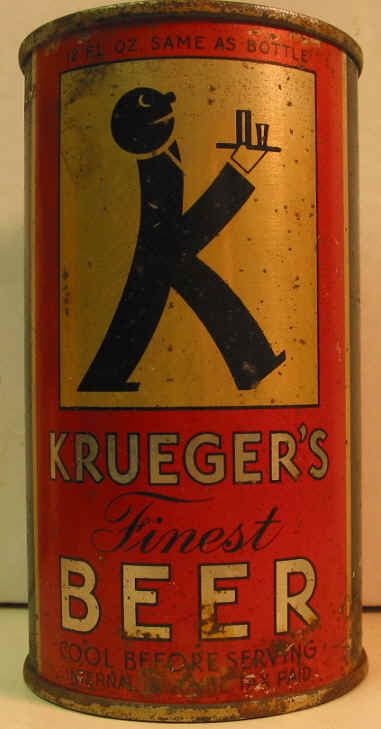
The original 
January 24th was beer can appreciation day. Or National Beer Can Appreciation Day if you are feeling more magnanimous or International Beer Can Appreciation Day if you want to take the global perspective. Needless to say the beer can was first sold on that day 77 years ago by the Gottfried Krueger Brewing Company and it contained their Krueger’s Finest Beer, which interestingly enough was a low alcohol beer. I have no idea what it tasted like but we can talk a bit about the ensuing revolution because it did change things significantly.

Cans have some distinct advantages over their glass counterparts; for starters they immediately eliminate two of the big beer killers. A sealed can is incredible effective at dealing with light and oxygen, both of which rapidly deteriorate the quality of the beer. (The third beer killer is heat) The other major benefit  to a brewer was that canned beer costs less than bottled beer to ship.

Beer in cans was a puzzle the brewing industry had been trying to solve for a while; part of the struggle was finding an easily produced can that could stand up to the heat generated during the pasteurization process and the pressure from carbonation. The other problem to solve was keeping the beer from leeching the taste of the metal since beer is very good at being a flavor vehicle. This was solved by a thin plastic liner in the can that had been developed in 1934. 

In the old days forgetting one of these was the party foul.
(original here)
In the beginning you needed a churchkey to punch open these steel or tin cans, but with the advent of the pull tab and then the stay tab made cans an even more viable option.

There was a price to pay for this though, canning had a high entry cost. The equipment was larger and expensive. If you could afford the initial investment though, the economy of scale would allow you to reap some long term financial benefits in a variety of areas. The large brewers were able to make this transition and soon the market was flooded with canned beer. Pabst led the charge and the other majors eventually followed suit though the bottle didn't yield ground easily. Eventually though as more and more small breweries crumbled under the beer giants it was an easy financial decision, you could make more money by canning brew. 

With this dominance canned beer came to symbolize American Macro lagers, the Budweisers, Millers, and Coors of the world, and with that came a reputation that it was only fit for beer of lesser quality. It is an image that the beer can still battles today. Bad beer came in cans and good beer, whether imports or crafts came in bottles. 

At the advent of craft brewing, small operations only had glass bottles as a choice, the can still being to costly to be considered a viable option. For a new microbrewery just starting out it was brown glass bottles, partly to distinguish themselves from green glass bottle imports and for the fact that brown glass lets in less UV rays. With the changing times, canning technology has become scaled so that it can be a choice. With a craft brewing industry that is growing, more and more breweries are switching to the can. In today's sustainability focused brewing world cans also have one other advantage over their glass counterpart. They can be recycled faster. The turn around time for a recycled can is about two months before it is back on the shelf. Glass is a little more complicated
Canned beer isn't just for macros anymore. 

So what can you find in the can today? Interestingly enough, the beer can is rising up from it’s second class status and being filled with top notch beer. If you want to get a brewer's perspective I very much recommend reading Tallgrass Brewing's "Canifesto". I argue that the reemergence of the beer can in the craft beer scene is actually a sign that the craft brewing industry is starting to mature. The sun is rising on the new age of canned beer. 

There is a whole lot more to the beer can story that is partly why it has taken so long to get this up. Consider this the Readers Digest version, and someday we will get around to cone tops, the can and bottle wars, and everything else beer can related. Thanks for your patience and comments are welcome!